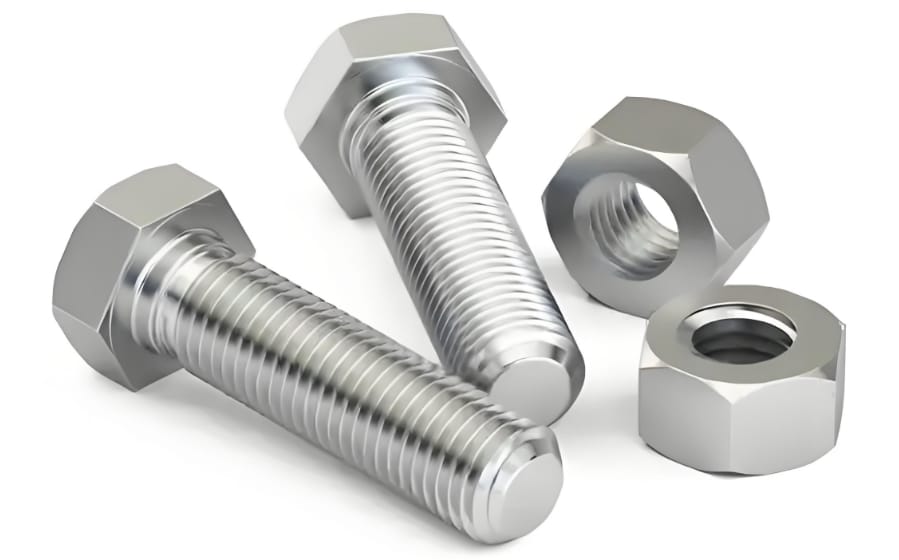
While carbon steel bolts and stainless steel nuts can be used together in the short term, long-term use carries significant risks.
1. Material incompatibility is the root cause
Carbon steel has a high iron content and is prone to rusting, whereas stainless steel contains alloying elements like chromium and nickel, providing corrosion resistance. When in direct contact within a humid environment, galvanic corrosion occurs; the stainless steel acts as the cathode, accelerating the oxidation and rusting of the carbon steel bolt. In coastal areas or outdoor equipment, for instance, this combination can lead to thread seizure within just a few months.
2. Caution is required in high-vibration environments
Environments involving vibration—such as automotive chassis or industrial conveyor belts—intensify friction between the two metals, causing the oxide layer on the thread surfaces to flake off. Due to its superior hardness, the stainless steel nut may cut into the carbon steel threads, causing mechanical binding (galling) that often leads to the bolt head snapping off during subsequent disassembly.
3. Emergency alternatives and optimization recommendations
If temporary use is unavoidable, apply a specialized anti-seize compound (such as molybdenum disulfide paste) to the threads and conduct regular inspections. For long-term solutions, it is recommended to use components made of the same material (e.g., all-stainless steel assemblies) or to insert a nylon washer or plastic sleeve between the bolt and nut to prevent the electrochemical reaction.
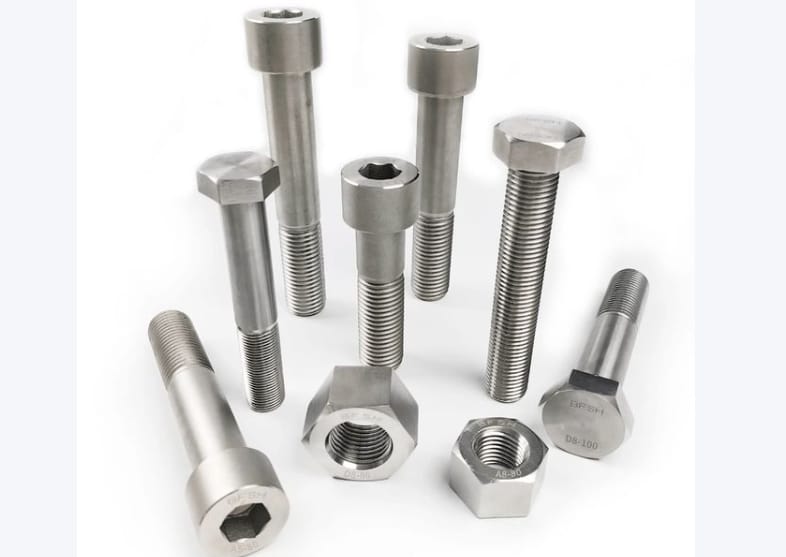
In practical applications, mixing materials for ship deck bolts has led to seal failures; switching to all-stainless steel components extended service life more than threefold. Operating conditions involving drastic temperature fluctuations (such as baking equipment) further increase the risk of loosening caused by differing thermal expansion coefficients. In such cases, titanium alloy bolt-and-nut sets are a preferable option; while the initial cost is higher, they offer superior overall performance.